

Museum
The Galicia Jewish Museum exists to commemorate the victims of the Holocaust and celebrate the Jewish culture of Polish Galicia, presenting Jewish history from a new perspective. An innovative and unique institution located in Kazimierz, the Jewish district of Kraków, Poland, the Museum is a registered charity in Poland.
The objectives of the Museum are to challenge the stereotypes and misconceptions typically associated with the Jewish past in Poland and to educate both Poles and Jews about their own histories, whilst encouraging them to think about the future.

Home to the internationally acclaimed permanent photographic exhibition, Traces of Memory, the Museum also shows an exciting range of temporary exhibitions, both curated in-house and sourced from around the world. The Museum’s Cultural and Education Programme is one of the most extensive in Poland, providing a range of services for both individual and group visitors, and the Media Resource Centre houses a growing archive of films on Jewish and Holocaust-related subjects. As well as engaging in primary research and publishing, the Museum also operates one of the largest Jewish bookshops in Poland, and the Museum café serves a range of hot and cold drinks and snacks, and offers a range of catering options for visiting groups.
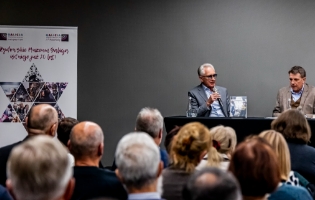
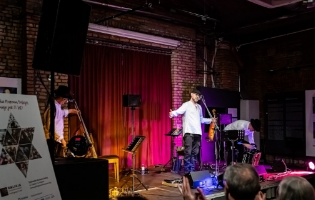
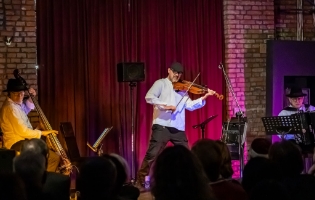
Used as a mill before the war, today the renovated Museum building has a light, contemporary, post-industrial feel – utilising glass, metal and bright woods – whilst still retaining many of the building’s original elements and structure. The flexible space is ideal for housing a range of exhibitions and hosting all types of cultural and social events, and the Museum is a popular venue for local artists, performers, and musicians.
The Museum employs over 20 full- and part-time staff, in Museum Operations; Education; Exhibitions; External Relations and Communications; and Finances and Administration. The team is headed by Museum Director Tomasz Strug, who is supported by an Management Board in Poland and a Supervisory Board in the UK.
History
The Galicia Jewish Museum was established in April 2004, by its founding director, Chris Schwarz. Chris spent most of his career working internationally as a photojournalist, travelling from Canada to Japan, Northern Ireland to Afghanistan. He worked for organizations including the International Committee on the Red Cross and the World Health Organisation, as well as numerous UK-based charities, and produced a number of exhibitions and books. His own work was typically focused on social issues, including homelessness, disability, and terminal illness.
Chris first visited Poland in 1981 to cover the Solidarity movement as a press photographer, but returning to Poland again after the collapse of communism he became interested in the existence of relics of Jewish life in the small towns and villages in the countryside outside Kraków.
It was a fortunate meeting with the British anthropologist Jonathan Webber that led to the joint project that was to become known as Traces of Memory. Prof. Webber, then teaching at the University of Oxford, later UNESCO Chair in Jewish and Interfaith Studies at the University of Birmingham, had been engaged in field research in Polish Galicia for a number of years. Working village-by-village, town-by-town, at times independently and on occasion leading larger research teams, he worked to discover and document the traces of the Jewish past still visible in the Polish landscape. His research was intended for publication as “Traces of Memory: The Ruins of Jewish Civilization in Polish Galicia” (Littman Library of Jewish Civilization), and his search for a publication photographer led him to Chris. Eventually – after working alongside Jonathan for almost 10 years and producing almost 1,000 photographs – Chris decided to establish the Galicia Jewish Museum, as a permanent home for his photographs.
Thus in late February 2004, Chris loaded his car with computers, printers, and cameras and drove across Europe to confront a biting Polish winter. With the help of local friends but no infrastructure, staff, or Polish language skills, he set about transforming an empty former warehouse building in Kazimierz, Kraków’s old Jewish quarter. He registered the Museum as a charity both in Poland and in the UK, and invited Jonathan to be Chairman of the Board of Trustees. Seven weeks later, the Galicia Jewish Museum was opened.
Inside the Museum, “Traces of Memory” was set up as a photographic exhibition, to form the Museum’s core collection. Over the next three years, Chris went on to develop an institution which – through its exciting range of exhibitions, dynamic cultural and education programme and, above all, by virtue of Chris’ own commitment, charisma and energy – came to play an essential role in the revival of interest in Jewish culture in Poland.
Through Chris’ work as the Museum’s director until his premature death in 2007, he made many thousands of people aware not only of the Jewish world that was destroyed by the Holocaust but also of the efforts being made to preserve the memory of it in present-day Poland. Since his death, the Museum has undergone a difficult but successful transition period, and continues to go from strength to strength. In 2019 Museum was visited by over 70,000 visitors, Jewish and non-Jewish, young and old, now pass through the Museum’s doors each year, and the Museum is an integral part of both the Polish and the Jewish cultural landscape of Kraków.
Chris dedicated the last years of his life to photographing and preserving the traces of Jewish life still to be seen in Polish Galicia. Through his creativity and openness to the world he brought people together and gave them a new understanding of history and of moral responsibility.
Awards and Commendations
The Galicia Jewish Museum has been repeatedly lauded not only by visitors, but also by experts in the fields of education, culture and tourism. The Museum has received many awards and commendations for its work in disseminating the culture and history of Jews in Poland, fostering and supporting intercultural dialogue and actively conducting history and cultural education.
Most important commendations:
- 2021: Family and Children Friendly Site
- 2019: Odys Award from the Kraków Chamber of Tourism
- 2018, 2019, 2020, 2021: Słoneczniki (The Sunflower Award for Most Developmental Events for Children)
- 2018, 2019, 2020: Miejsce Przyjazne Dzieciom [Children Friendly Places]
- 2014, 2015: Słoneczniki (best initiatives for children in Kraków)
- 2014: Odys Award from the Kraków Chamber of Tourism for long-standing creation of multicultural bridges in Kazimierz
- 2014: Trip Advisor: one of the 10 most important museums in Poland
- 2014: Best Place in the Local Life Kraków plebiscite
- 2013: Kryształy Soli in the category “Protecting cultural heritage” in the competition organised by the Office of the Marszałek of the Małopolska Voivodeship
- 2005-2015: Miejsce Przyjazne Maluchom [Friendly Places for Children] – 10 editions